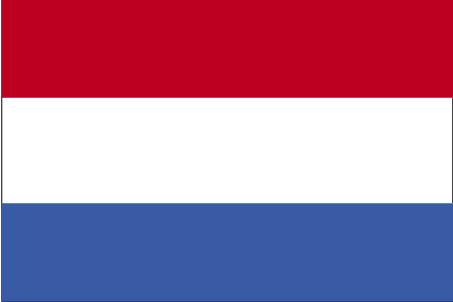
Indonesia Italy United States Ukraine Singapore Egypt China Romania Germany Russia Algeria United Kingdom Saudi Arabia France Morocco Netherlands Brazil Canada Ireland Spain Japan India Turkey Mexico Poland Australia Tunisia Finland Iraq Malaysia Portugal Syria Sweden Czech Republic Switzerland South Korea Moldova Hong Kong Ecuador Philippines Venezuela South Africa Argentina Belarus Kazakhstan Belgium Palestinian Territory Vietnam Colombia Israel Austria Jordan Pakistan Hungary Chile United Arab Emirates Denmark Greece Norway Oman Bulgaria Serbia Lithuania Peru Georgia Cambodia Slovakia Qatar Thailand Slovenia Bosnia and Herzegovina Armenia Azerbaijan Libya Sudan Croatia Nigeria Iran New Zealand Taiwan Latvia Uruguay Puerto Rico Bangladesh Costa Rica Yemen Bahrain Kuwait Cyprus Albania North Macedonia Uzbekistan Timor-Leste Luxembourg Estonia Cuba Dominican Republic Lebanon Seychelles Kenya Guatemala Iceland Mongolia Malta Trinidad and Tobago Bolivia Ghana Panama Kyrgyzstan El Salvador Paraguay Sri Lanka Montenegro Nepal Mauritius Uganda Jamaica Honduras Brunei Darussalam Guernsey Turkmenistan Ethiopia Kosovo San Marino Angola Botswana Nicaragua Myanmar Tanzania Bahamas Macao Zimbabwe Benin Namibia Cote D'Ivoire Gibraltar Belize Andorra Aruba Barbados Afghanistan Guinea Falkland Islands Tajikistan Monaco Isle of Man Senegal Curacao Jersey Mozambique Gambia Guadeloupe Liechtenstein Rwanda Somalia Vatican City Papua New Guinea Reunion Maldives Mauritania Saint Vincent and the Grenadines Cabo Verde Saint Kitts and Nevis Saint Lucia Cameroon Greenland Democratic Republic of the Congo Republic of the Congo Lesotho Bermuda Madagascar French Polynesia Malawi Micronesia Faroe Islands Togo Martinique Antigua and Barbuda Laos Guam U.S. Virgin Islands Samoa Suriname Haiti Guyana French Guiana Netherlands Flag Meaning & Details 2,037 VISITORS FROM HERE! Netherlands Flag Flag Information three equal horizontal bands of red (bright vermilion top), white, and blue (cobalt) similar to the flag of Luxembourg, which uses a lighter blue and is longer the colors were derived from those of WILLIAM I, Prince of Orange, who led the Dutch Revolt against Spanish sovereignty in the latter half of the 16th century originally the upper band was orange, but because its dye tended to turn red over time, the red shade was eventually made the permanent color the banner is perhaps the oldest tricolor in continuous use
Learn more about Netherlands » CIA - The World Factbook
 Previous Country | Next Country
  » Back to Flag Counter Overview