
Bolivia Population: 11,306,341
1,654 VISITORS FROM HERE!«  Previous Country | Next Country Previous Country | Next Country  » Back to Flag Counter Overview » Back to Flag Counter Overview | 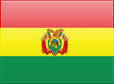 |
| History | |
| Bolivia, named after independence fighter Simon BOLIVAR, broke away from Spanish rule in 1825; much of its subsequent history has consisted of a series of coups and countercoups, with the last coup occurring in 1978. Democratic civilian rule was established in 1982, but leaders have faced difficult problems of deep-seated poverty, social unrest, and illegal drug production. In December 2005, Bolivians elected Movement Toward Socialism leader Evo MORALES president - by the widest margin of any leader since the restoration of civilian rule in 1982 - after he ran on a promise to change the country's traditional political class and empower the nation's poor, indigenous majority. In December 2009 and October 2014, President MORALES easily won reelection. His party maintained control of the legislative branch of the government, which has allowed him to continue his process of change. In February 2016, MORALES narrowly lost a referendum to approve a constitutional amendment that would have allowed him to compete in the 2019 presidential election. However, a 2017 Supreme Court ruling stating that term limits violate human rights has provided the justification for MORALES to be chosen by his party to run again in 2019. |

|  |
| |
| Geography | |
| |
| Location: | Central South America, southwest of Brazil |
| Geographic coordinates: | 17 00 S, 65 00 W |
| Area: | total: 1,098,581 sq km land: 1,083,301 sq km water: 15,280 sq km Size comparison: slightly less than three times the size of Montana |
| Land Boundaries: | total: 7,252 km border countries (5): Argentina 942 km, Brazil 3403 km, Chile 942 km, Paraguay 753 km, Peru 1212 km |
| Coastline: | 0 km (landlocked) |
| Maritime claims: | none (landlocked) |
| Climate: | varies with altitude; humid and tropical to cold and semiarid |
| Terrain: | rugged Andes Mountains with a highland plateau (Altiplano), hills, lowland plains of the Amazon Basin |
| Natural resources: | tin, natural gas, petroleum, zinc, tungsten, antimony, silver, iron, lead, gold, timber, hydropower |
| Land use: | agricultural land: 34.3% (2011 est.) arable land: 3.6% (2011 est.) permanent crops: 0.2% (2011 est.) permanent pasture: 30.5% (2011 est.) forest: 52.5% (2011 est.) other: 13.2% (2011 est.) |
| Irrigated land: | 3,000 sq km (2012) |
| Natural hazards: | flooding in the northeast (March to April) volcanism: volcanic activity in Andes Mountains on the border with Chile; historically active volcanoes in this region are Irruputuncu (5,163 m), which last erupted in 1995, and the Olca-Paruma volcanic complex (5,762 m to 5,167 m) |
| Current Environment Issues: | the clearing of land for agricultural purposes and the international demand for tropical timber are contributing to deforestation; soil erosion from overgrazing and poor cultivation methods (including slash-and-burn agriculture); desertification; loss of biodiversity; industrial pollution of water supplies used for drinking and irrigation |
| International Environment Agreements: | party to: Biodiversity, Climate Change, Climate Change-Kyoto Protocol, Desertification, Endangered Species, Hazardous Wastes, Law of the Sea, Marine Dumping, Ozone Layer Protection, Ship Pollution, Tropical Timber 83, Tropical Timber 94, Wetlands signed, but not ratified: Environmental Modification, Marine Life Conservation |
| ^Back to Top | |
| People | |
| |
| Nationality: | noun: Bolivian(s) adjective: Bolivian |
| Ethnic groups: | mestizo (mixed white and Amerindian ancestry) 68%, indigenous 20%, white 5%, cholo/chola 2%, black 1%, other 1%, unspecified 3% ; 44% of respondents indicated feeling part of some indigenous group, predominantly Quechua or Aymara (2009 est.) note: results among surveys vary based on the wording of the ethnicity question and the available response choices; the 2001 national census did not provide "mestizo" as a response choice, resulting in a much higher proportion of respondents identifying themselves as belonging to one of the available indigenous ethnicity choices; the use of "mestizo" and "cholo" varies among response choices in surveys, with surveys using the terms interchangeably, providing one or the other as a response choice, or providing the two as separate response choices |
| Languages: | Spanish (official) 60.7%, Quechua (official) 21.2%, Aymara (official) 14.6%, foreign languages 2.4%, Guarani (official) 0.6%, other native languages 0.4%, none 0.1% (2001 est.) note: Bolivia's 2009 constitution designates Spanish and all indigenous languages as official; 36 indigenous languages are specified, including a few that are extinct |
| Religions: | Roman Catholic 76.8%, Evangelical and Pentecostal 8.1%, Protestant 7.9%, other 1.7%, none 5.5% (2012 est.) |
| Population: | 11,306,341 (July 2018 est.) |
| Age structure: | 0-14 years: 31.34% (male 1,805,765 /female 1,737,647) 15-24 years: 19.37% (male 1,109,388 /female 1,080,662) 25-54 years: 37.9% (male 2,098,847 /female 2,185,890) 55-64 years: 5.96% (male 310,250 /female 363,403) 65 years and over: 5.43% (male 270,435 /female 344,054) (2018 est.) |
| Dependency ratios: | total dependency ratio: 63.7 (2015 est.) youth dependency ratio: 53.1 (2015 est.) elderly dependency ratio: 10.6 (2015 est.) potential support ratio: 9.4 (2015 est.) |
| Median age: | total: 24.6 years male: 23.9 years female: 25.4 years (2018 est.) |
| Population growth rate: | 1.48% (2018 est.) |
| Birth rate: | 21.6 births/1,000 population (2018 est.) |
| Death rate: | 6.3 deaths/1,000 population (2018 est.) |
| Net migration rate: | -0.4 migrant(s)/1,000 population (2018 est.) |
| Urbanization: | urban population: 69.4% of total population (2018) rate of urbanization: 1.97% annual rate of change (2015-20 est.) |
| Major urban areas - population: | 1.814 million LA PAZ (capital) 1.641 million Santa Cruz 1.24 million Cochabamba 278,000 Sucre (constitutional capital) (2018) |
| Sex ratio: | at birth: 1.05 male(s)/female 0-14 years: 1.04 male(s)/female 15-24 years: 1.03 male(s)/female 25-54 years: 0.96 male(s)/female 55-64 years: 0.85 male(s)/female 65 years and over: 0.79 male(s)/female total population: 0.98 male(s)/female (2018 est.) Mother's mean age at first birth: 21.2 years (2008 est.) note: median age at first birth among women 25-29 |
| Maternal mortality rate: | 206 deaths/100,000 live births (2015 est.) |
| Infant mortality rate: | total: 34.2 deaths/1,000 live births male: 37.6 deaths/1,000 live births female: 30.7 deaths/1,000 live births (2018 est.) |
| Life expectancy at birth: | total population: 69.8 years male: 67 years female: 72.8 years (2018 est.) |
| Total fertility rate: | 2.58 children born/woman (2018 est.) |
| Contraceptive prevalence rate: | 66.5% (2016) |
| Physicians density: | 1.61 physicians/1,000 population (2016) |
| Hospital bed density: | 1.1 beds/1,000 population (2014) |
| Drinking water source: | improved: urban: 96.7% of population rural: 75.6% of population total: 90% of population unimproved: urban: 3.3% of population rural: 24.4% of population total: 10% of population (2015 est.) |
| Sanitation facility access: | improved: urban: 60.8% of population (2015 est.) rural: 27.5% of population (2015 est.) total: 50.3% of population (2015 est.) unimproved: urban: 39.2% of population (2015 est.) rural: 72.5% of population (2015 est.) total: 49.7% of population (2015 est.) |
| HIV/AIDS - adult prevalence rate: | 0.3% (2017 est.) |
| HIV/AIDS - people living with HIV/AIDS: | 21,000 (2017 est.) |
| HIV/AIDS - deaths: | <1000 (2017 est.) |
| Obesity - adult prevalence rate: | 20.2% (2016) |
| Children under the age of 5 years underweight: | 3.4% (2016) |
| Education expenditures: | 7.3% of GDP (2014) |
| Literacy: | definition: age 15 and over can read and write (2015 est.) total population: 92.5% male: 96.5% female: 88.6% (2015 est.) Unemployment, youth ages 15-24: total: 6.9% male: 5.8% female: 8.6% (2015 est.) |
| ^Back to Top | |
| Government | |
| |
| Country name: | conventional long form: Plurinational State of Bolivia conventional short form: Bolivia local long form: Estado Plurinacional de Bolivia local short form: Bolivia etymology: the country is named after Simon BOLIVAR, a 19th-century leader in the South American wars for independence |
| Government type: | presidential republic |
| Capital: | name: La Paz (administrative capital); Sucre (constitutional [legislative and judicial] capital) geographic coordinates: 16 30 S, 68 09 W time difference: UTC-4 (1 hour ahead of Washington, DC, during Standard Time) etymology: La Paz is a shortening of the original name of the city, Nuestra Senora de La Paz (Our Lady of Peace); Sucre is named after Antonio Jose de Sucre (1795-1830), military hero in the independence struggle from Spain and the second president of Bolivia note: at approximately 3,630 m above sea level, La Paz's elevation makes it the highest capital city in the world |
| Administrative divisions: | 9 departments (departamentos, singular - departamento); Beni, Chuquisaca, Cochabamba, La Paz, Oruro, Pando, Potosi, Santa Cruz, Tarija |
| Independence: | 6 August 1825 (from Spain) |
| National holiday: | Independence Day, 6 August (1825) |
| Constitution: | history: many previous; latest drafted 6 August 2006 to 9 December 2008, approved by referendum 25 January 2009, effective 7 February 2009; note - in late 2017, the Constitutional Tribunal declared inapplicable provisions of the constitution that prohibit elected officials, including the president, from serving more than 2 consecutive terms amendments: proposed through public petition by at least 20% of voters or by the Plurinational Legislative Assembly; passage requires approval by at least two-thirds majority vote of the total membership of the Assembly and approval in a referendum; amended 2013 (2018) |
| Legal system: | civil law system with influences from Roman, Spanish, canon (religious), French, and indigenous law |
| Suffrage: | 18 years of age; universal and compulsory |
| Executive branch: | chief of state: President Juan Evo MORALES Ayma (since 22 January 2006); Vice President Alvaro GARCIA Linera (since 22 January 2006); note - the president is both chief of state and head of government head of government: President Juan Evo MORALES Ayma (since 22 January 2006); Vice President Alvaro GARCIA Linera (since 22 January 2006) cabinet: Cabinet appointed by the president elections/appointments: president and vice president directly elected on the same ballot one of 3 ways: candidate wins at least 50% of the vote, or at least 40% of the vote and 10% more than the next highest candidate; otherwise a second round is held and the winner determined by simple majority vote; no term limits (changed from two consecutive term limit by Constitutional Court in late 2017); election last held on 12 October 2014 (next to be held in 2019) election results: Juan Evo MORALES Ayma reelected president; percent of vote - Juan Evo MORALES Ayma (MAS) 61%; Samuel DORIA MEDINA Arana (UN) 24.5%; Jorge QUIROGA Ramirez (POC) 9.1%; other 5.4% |
| Legislative branch: | description: bicameral Plurinational Legislative Assembly or Asamblea Legislativa Plurinacional consists of: Chamber of Senators or Camara de Senadores (36 seats; members directly elected in multi-seat constituencies by proportional representation vote; members serve 5-year terms) Chamber of Deputies or Camara de Diputados (130 seats; 70 members directly elected in single-seat constituencies by simple majority vote, 53 directly elected in single-seat constituencies by proportional representation vote, and 7 - apportioned to non-contiguous, rural areas in 7 of the 9 states - directly elected in single-seat constituencies by simple majority vote; members serve 5-year terms) elections: Chamber of Senators - last held on 12 October 2014 (next to be held in 2019) Chamber of Deputies - last held on 12 October 2014 (next to be held in 2019) election results: Chamber of Senators - percent of vote by party - NA; seats by party - MAS 25, UD 9, PDC 2; composition - men 19, women 17, percent of women 47.2% Chamber of Deputies - percent of vote by party - NA; seats by party - MAS 88, UD 32, PDC 10; composition - men 61, women 69, percent of women 53.1%; note - total Plurinational Legislative Assembly percent of women 51.8% |
| Judicial branch: | highest courts: Supreme Court or Tribunal Supremo de Justicia (consists of 12 judges or ministros organized into civil, penal, social, and administrative chambers); Plurinational Constitutional Tribunal (consists of 7 primary and 7 alternate magistrates); Plurinational Electoral Organ (consists of 7 members and 6 alternates); National Agro-Environment Court (consists of 5 primary and 5 alternate judges; Council of the Judiciary (consists of 3 primary and 3 alternate judges) judge selection and term of office: Supreme Court, Plurinational Constitutional Tribunal, National Agro-Environmental Court, and Council of the Judiciary candidates pre-selected by the Plurinational Legislative Assembly and elected by direct popular vote; judges elected for 6-year terms; Plurinational Electoral Organ judges appointed - 6 by the Legislative Assembly and 1 by the president of the republic; members serve single 6-year terms subordinate courts: National Electoral Court; District Courts (in each of the 9 administrative departments); agro-environmental lower courts |
| Political parties and leaders: | Christian Democratic Party or PDC [Jorge Fernando QUIROGA Ramirez] Movement Toward Socialism or MAS [Juan Evo MORALES Ayma] National Unity or UN [Samuel DORIA MEDINA Arana] Social Democrat Movement or MDS [Ruben COSTAS Aguilera] note: the Democrat Unity Coalition or UD [Samuel DORIA MEDINA Arana] was a coalition comprised of several of the largest opposition parties participating in the 2014 election, which included the Democrats (MDS), National Unity Front (UN), and Without Fear Movement |
| International organization participation: | CAN, CD, CELAC, FAO, G-77, IADB, IAEA, IBRD, ICAO, ICC (national committees), ICCt, ICRM, IDA, IFAD, IFC, IFRCS, ILO, IMF, IMO, Interpol, IOC, IOM, IPU, ISO (correspondent), ITSO, ITU, LAES, LAIA, Mercosur (associate), MIGA, MINUSTAH, MONUSCO, NAM, OAS, OPANAL, OPCW, PCA, UN, UN Security Council (temporary), UNAMID, UNASUR, UNCTAD, UNESCO, UNIDO, Union Latina, UNMIL, UNMISS, UNOCI, UNWTO, UPU, WCO, WFTU (NGOs), WHO, WIPO, WMO, WTO |
| National symbol(s): | llama, Andean condor; national colors: red, yellow, green |
| National anthem: | name: "Cancion Patriotica" (Patriotic Song) lyrics/music: Jose Ignacio de SANJINES/Leopoldo Benedetto VINCENTI note: adopted 1852 |
| Diplomatic representation in the US: | chief of mission: Ambassador (vacant); Charge d'Affaires Rafael Pablo CANEDO Daroca (since July 2017) chancery: 2109 E Street NW, Washington, DC 20037 telephone: [1] (202) 483-4410 FAX: [1] (202) 328-3712 consulate(s) general: Houston, Los Angeles, Miami, New York, Washington, DC note: in September 2008, the US expelled the Bolivian ambassador to the US in reciprocity for Bolivia expelling the US ambassador to Bolivia |
| Diplomatic representation from the US: | chief of mission: Ambassador (vacant); Charge d'Affaires Bruce WILLIAMSON (since December 2017) embassy: Avenida Arce 2780, Casilla 425, La Paz mailing address: 3220 La Paz Place, Dulles, VA, 20189-3220 telephone: [591] (2) 216-8000 FAX: [591] (2) 216-8111 note: in September 2008, the Bolivian Government expelled the US Ambassador to Bolivia, Philip GOLDBERG, and both countries have yet to reinstate their ambassadors |
| ^Back to Top | |
| Economy | |
Bolivia is a resource rich country with strong growth attributed to captive markets for natural gas exports – to Brazil and Argentina. However, the country remains one of the least developed countries in Latin America because of state-oriented policies that deter investment. Following an economic crisis during the early 1980s, reforms in the 1990s spurred private investment, stimulated economic growth, and cut poverty rates. The period 2003-05 was characterized by political instability, racial tensions, and violent protests against plans - subsequently abandoned - to export Bolivia's newly discovered natural gas reserves to large Northern Hemisphere markets. In 2005-06, the government passed hydrocarbon laws that imposed significantly higher royalties and required foreign firms then operating under risk-sharing contracts to surrender all production to the state energy company in exchange for a predetermined service fee; the laws engendered much public debate. High commodity prices between 2010 and 2014 sustained rapid growth and large trade surpluses with GDP growing 6.8% in 2013 and 5.4% in 2014. The global decline in oil prices that began in late 2014 exerted downward pressure on the price Bolivia receives for exported gas and resulted in lower GDP growth rates - 4.9% in 2015 and 4.3% in 2016 - and losses in government revenue as well as fiscal and trade deficits. A lack of foreign investment in the key sectors of mining and hydrocarbons, along with conflict among social groups, pose challenges for the Bolivian economy. In 2015, President Evo MORALES expanded efforts to court international investment and boost Bolivia’s energy production capacity. MORALES passed an investment law and promised not to nationalize additional industries in an effort to improve the investment climate. In early 2016, the Government of Bolivia approved the 2016-2020 National Economic and Social Development Plan aimed at maintaining growth of 5% and reducing poverty. | |
| GDP (purchasing power parity): | $83.72 billion (2017 est.) $80.35 billion (2016 est.) $77.07 billion (2015 est.) note: data are in 2017 dollars |
| GDP (official exchange rate): | $37.78 billion (2017 est.) |
| GDP - real growth rate: | 4.2% (2017 est.) 4.3% (2016 est.) 4.9% (2015 est.) |
| GDP - per capita (PPP): | $7,600 (2017 est.) $7,400 (2016 est.) $7,200 (2015 est.) note: data are in 2017 dollars |
| Gross national saving: | 15.7% of GDP (2017 est.) 15.3% of GDP (2016 est.) 14.2% of GDP (2015 est.) GDP - composition, by end use: household consumption: 67.7% (2017 est.) government consumption: 17% (2017 est.) investment in fixed capital: 21.3% (2017 est.) investment in inventories: 3.8% (2017 est.) exports of goods and services: 21.7% (2017 est.) imports of goods and services: -31.3% (2017 est.) GDP - composition, by sector of origin: agriculture: 13.8% (2017 est.) industry: 37.8% (2017 est.) services: 48.2% (2017 est.) |
| Agriculture - products: | soybeans, quinoa, Brazil nuts, sugarcane, coffee, corn, rice, potatoes, chia, coca |
| Industries: | mining, smelting, electricity, petroleum, food and beverages, handicrafts, clothing, jewelry |
| Industrial production growth rate: | 2.2% (2017 est.) |
| Labor force: | 5.719 million (2016 est.) |
| Labor force - by occupation: | agriculture: 29.4% industry: 22% services: 48.6% (2015 est.) |
| Unemployment rate: | 4% (2017 est.) 4% (2016 est.) note: data are for urban areas; widespread underemployment |
| Population below poverty line: | 38.6% (2015 est.) note: based on percent of population living on less than the international standard of $2/day |
| Household income or consumption by percentage share: | lowest 10%: 0.9% highest 10%: 36.1% (2014 est.) |
| Distribution of family income - Gini index: | 47 (2016 est.) 57.9 (1999) |
| Budget: | revenues: 15.09 billion (2017 est.) expenditures: 18.02 billion (2017 est.) |
| Taxes and other revenues: | 39.9% (of GDP) (2017 est.) Budget surplus (+) or deficit (-): -7.8% (of GDP) (2017 est.) |
| Public debt: | 49% of GDP (2017 est.) 44.9% of GDP (2016 est.) note: data cover general government debt and includes debt instruments issued by government entities other than the treasury; the data include treasury debt held by foreign entities; the data include debt issued by subnational entities |
| Fiscal year: | calendar year |
| Inflation rate (consumer prices): | 2.8% (2017 est.) 3.6% (2016 est.) |
| Current account balance: | -$2.375 billion (2017 est.) -$1.932 billion (2016 est.) |
| Exports: | $7.746 billion (2017 est.) $7.214 billion (2016 est.) |
| Exports - commodities: | natural gas, silver, zinc, lead, tin, gold, quinoa, soybeans and soy products |
| Exports - partners: | Brazil 17.9%, Argentina 16%, US 7.8%, Japan 7.3%, India 6.6%, South Korea 6.3%, Colombia 5.8%, China 5.1%, UAE 4.7% (2017) |
| Imports: | $8.601 billion (2017 est.) $7.888 billion (2016 est.) |
| Imports - commodities: | machinery, petroleum products, vehicles, iron and steel, plastics |
| Imports - partners: | China 21.7%, Brazil 16.8%, Argentina 12.6%, US 8.4%, Peru 6.5% (2017) |
| Reserves of foreign exchange and gold: | $10.26 billion (31 December 2017 est.) $10.08 billion (31 December 2016 est.) |
| Debt - external: | $12.81 billion (31 December 2017 est.) $7.268 billion (31 December 2016 est.) |
| Stock of direct foreign investment - at home: | $12.31 billion (31 December 2017 est.) $11.6 billion (31 December 2016 est.) |
| Stock of direct foreign investment - abroad: | $0 (31 December 2017 est.) $0 (31 December 2016 est.) |
| Market value of publicly traded shares: | $12.8 billion (31 December 2017 est.) $12.3 billion (31 December 2016 est.) $11.11 billion (31 December 2015 est.) |
| Exchange rates: | bolivianos (BOB) per US dollar - 6.86 (2017 est.) 6.86 (2016 est.) 6.91 (2015 est.) 6.91 (2014 est.) 6.91 (2013 est.) |
| ^Back to Top | |
| Energy | |
| |
| Electricity - production: | 8.951 billion kWh (2016 est.) |
| Electricity - consumption: | 7.785 billion kWh (2016 est.) |
| Electricity - exports: | 0 kWh (2017 est.) |
| Electricity - imports: | 0 kWh (2016 est.) |
| Electricity - installed generating capacity: | 2.764 million kW (2016 est.) |
| Electricity - from fossil fuels: | 76% of total installed capacity (2016 est.) |
| Electricity - from nuclear fuels: | 0% of total installed capacity (2017 est.) |
| Electricity - from hydroelectric plants: | 18% of total installed capacity (2017 est.) |
| Electricity - from other renewable sources: | 7% of total installed capacity (2017 est.) |
| Crude oil - production: | 59,330 bbl/day (2017 est.) |
| Crude oil - exports: | 1,274 bbl/day (2015 est.) |
| Crude oil - imports: | 0 bbl/day (2015 est.) |
| Crude oil - proved reserves: | 211.5 million bbl (1 January 2018 est.) |
| Refined petroleum products - production: | 65,960 bbl/day (2015 est.) |
| Refined petroleum products - consumption: | 83,000 bbl/day (2016 est.) |
| Refined petroleum products - exports: | 9,686 bbl/day (2015 est.) |
| Refined petroleum products - imports: | 20,620 bbl/day (2015 est.) |
| Natural gas - production: | 18.69 billion cu m (2017 est.) |
| Natural gas - consumption: | 3.171 billion cu m (2017 est.) |
| Natural gas - exports: | 15.46 billion cu m (2017 est.) |
| Natural gas - imports: | 0 cu m (2017 est.) |
| Natural gas - proved reserves: | 295.9 billion cu m (1 January 2018 est.) |
| Carbon dioxide emissions from consumption of energy: | 17.66 million Mt (2017 est.) |
| ^Back to Top | |
| Communications | |
| |
| Cellular Phones in use: | total subscriptions: 10,106,216 subscriptions per 100 inhabitants: 91 (July 2016 est.) |
| Telephone system: | general assessment: state-owned Empresa Nacional de Telecomunicaciones (Entel) is the country's incumbent long-distance operator, and offers local telephone service, DSL, and satellite TV; its subsidiary Entel Movil is Bolivia's largest mobile network provider, reliability, and coverage have steadily improved, but some remote areas are still underserved; Entel plans to extend fibre to all 339 municipal capital cities by 2022; MNP (mobile number potability) launched in October 2018; Bolivian Space Agency planning to launch a second telecom satellite after 2020 (2018) domestic: most telephones are concentrated in La Paz, Santa Cruz, and other capital cities; 8 per 100 fixed-line, mobile-cellular telephone use expanding rapidly and teledensity stood at 91 per 100 persons (2018) international: country code - 591; satellite earth station - 1 Intelsat (Atlantic Ocean); Bolivia has no direct access to submarine cable networks and must therefore connect to the rest of the world either via satellite or through terrestrial links across neighbouring countries |
| Broadcast media: | large number of radio and TV stations broadcasting with private media outlets dominating; state-owned and private radio and TV stations generally operating freely, although both pro-government and anti-government groups have attacked media outlets in response to their reporting |
| Internet country code: | .bo |
| Internet users: | total: 4,354,678 percent of population: 39.7% (July 2016 est.) |
| ^Back to Top | |
| Transportation | |
| |
| Airports: | 855 (2013) |
| Airports (paved runways): | total 21 (2017) over 3,047 m: 5 (2017) 2,438 to 3,047 m: 4 (2017) 1,524 to 2,437 m: 6 (2017) 914 to 1,523 m: 6 (2017) |
| Airports (unpaved runways): | total 834 (2013) over 3,047 m: 1 (2013) 2,438 to 3,047 m: 4 (2013) 1,524 to 2,437 m: 47 (2013) 914 to 1,523 m: 151 (2013) under 914 m: 631 (2013) |
| Pipelines: | 5457 km gas, 51 km liquid petroleum gas, 2511 km oil, 1627 km refined products (2013) |
| Railways: | total 3,960 km (2019) narrow gauge: 3,960 km 1.000-m gauge (2014) |
| Roadways: | total 90,568 km (2017) paved: 9,792 km (2017) unpaved: 80,776 km (2017) |
| Waterways: | 10,000 km (commercially navigable almost exclusively in the northern and eastern parts of the country) (2012) |
| Merchant marine: | total 49 by type: general cargo 36, oil tanker 2, other 11 (2018) |
| Ports and terminals: | river port(s): Puerto Aguirre (Paraguay/Parana) note: Bolivia has free port privileges in maritime ports in Argentina, Brazil, Chile, and Paraguay |
| ^Back to Top | |
| Military | |
| |
| Military branches: | Bolivian Armed Forces: Bolivian Army (Ejercito Boliviano, EB), Bolivian Naval Force (Fuerza Naval Boliviana, FNB, includes Marines), Bolivian Air Force (Fuerza Aerea Boliviana, FAB) (2017) |
| Military service age and obligation: | 16-49 years of age for 12-month voluntary male and female military service; Bolivian citizenship required; minimum age of combat is 18; when annual number of volunteers falls short of goal, compulsory recruitment is effected, including conscription of boys as young as 14; 15-19 years of age for voluntary premilitary service, provides exemption from further military service (2017) |
| Military expenditures: | 1.76% of GDP (2017) 1.68% of GDP (2016) 1.74% of GDP (2015) 1.9% of GDP (2014) 1.84% of GDP (2013) |
| ^Back to Top | |
| Transnational Issues | |
| |
| Disputes - International: | Chile and Peru rebuff Bolivia's reactivated claim to restore the Atacama corridor, ceded to Chile in 1884, but Chile offers instead unrestricted but not sovereign maritime access through Chile for Bolivian products; contraband smuggling, human trafficking, and illegal narcotic trafficking are problems in the porous areas of its border regions with all of its neighbors (Argentina, Brazil, Chile, Paraguay, and Peru) |
| Illicit drugs: | world's third-largest cultivator of coca (after Colombia and Peru) with an estimated 37,500 hectares under cultivation in 2016, a 3 percent increase over 2015; third largest producer of cocaine, estimated at 275 metric tons potential pure cocaine in 2016; transit country for Peruvian and Colombian cocaine destined for Brazil, Argentina, Chile, Paraguay, and Europe; weak border controls; some money-laundering activity related to narcotics trade; major cocaine consumption |
| ^Back to Top | |
«
Previous Country | Next Country » Back to Flag Counter OverviewSource: CIA - The World Factbook