Guinea-Bissau Population: 1,833,247
«  Previous Country | Next Country Previous Country | Next Country  » » | 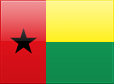 |
| History | |
| Since independence from Portugal in 1974, Guinea-Bissau has experienced considerable political and military upheaval. In 1980, a military coup established authoritarian General Joao Bernardo 'Nino' VIEIRA as president. Despite eventually setting a path to a market economy and multiparty system, VIEIRA's regime was characterized by the suppression of political opposition and the purging of political rivals. Several coup attempts through the 1980s and early 1990s failed to unseat him. In 1994 VIEIRA was elected president in the country's first free, multiparty election. A military mutiny and resulting civil war in 1998 eventually led to VIEIRA's ouster in May 1999. In February 2000, a transitional government turned over power to opposition leader Kumba YALA after he was elected president in transparent polling. In September 2003, after only three years in office, YALA was overthrown in a bloodless military coup, and businessman Henrique ROSA was sworn in as interim president. In 2005, former President VIEIRA was reelected, pledging to pursue economic development and national reconciliation; he was assassinated in March 2009. Malam Bacai SANHA was elected in an emergency election held in June 2009, but he passed away in January 2012 from a long-term illness. A military coup in April 2012 prevented Guinea-Bissau's second-round presidential election - to determine SANHA's successor - from taking place. Following mediation by the Economic Community of Western African States, a civilian transitional government assumed power in 2012 and remained until Jose Mario VAZ won a free and fair election in 2014. Beginning in 2015, a political dispute between factions in the ruling PAIGC party brought government gridlock. It was not until April 2018 that a consensus prime minister could be appointed, the national legislature reopened (having been closed for two years), and a new government formed under Prime Minister Aristides GOMES. In March 2019, the government held legislative elections, voting in the PAIGC as the ruling party; however, President VAZ continues to perpetuate a political stalemate by refusing to name PAICG President Domingos SIMOES PEREIRA Prime Minister. |
 |
| |
| Geography | |
| |
| Location: | Western Africa, bordering the North Atlantic Ocean, between Guinea and Senegal |
| Geographic coordinates: | 12 00 N, 15 00 W |
| Area: | total: 36,125 sq km land: 28,120 sq km water: 8,005 sq km Size comparison: slightly less than three times the size of Connecticut |
| Land Boundaries: | total: 762 km border countries (2): Guinea 421 km, Senegal 341 km |
| Coastline: | 350 km |
| Maritime claims: | territorial sea: 12 nm exclusive economic zone: 200 nm |
| Climate: | tropical; generally hot and humid; monsoonal-type rainy season (June to November) with southwesterly winds; dry season (December to May) with northeasterly harmattan winds |
| Terrain: | mostly low-lying coastal plain with a deeply indented estuarine coastline rising to savanna in east; numerous off-shore islands including the Arquipelago Dos Bijagos consisting of 18 main islands and many small islets |
| Natural resources: | fish, timber, phosphates, bauxite, clay, granite, limestone, unexploited deposits of petroleum |
| Land use: | agricultural land: 44.8% (2011 est.) arable land: 8.2% (2011 est.) permanent crops: 6.9% (2011 est.) permanent pasture: 29.7% (2011 est.) forest: 55.2% (2011 est.) other: 0% (2011 est.) |
| Irrigated land: | 250 sq km (2012) |
| Natural hazards: | hot, dry, dusty harmattan haze may reduce visibility during dry season; brush fires |
| Current Environment Issues: | deforestation (rampant felling of trees for timber and agricultural purposes); soil erosion; overgrazing; overfishing |
| International Environment Agreements: | party to: Biodiversity, Climate Change, Climate Change-Kyoto Protocol, Desertification, Endangered Species, Hazardous Wastes, Law of the Sea, Ozone Layer Protection, Wetlands signed, but not ratified: none of the selected agreements |
| ^Back to Top | |
| People | |
| |
| Nationality: | noun: Bissau-Guinean(s) adjective: Bissau-Guinean |
| Ethnic groups: | Fulani 28.5%, Balanta 22.5%, Mandinga 14.7%, Papel 9.1%, Manjaco 8.3%, Beafada 3.5%, Mancanha 3.1%, Bijago 2.1%, Felupe 1.7%, Mansoanca 1.4%, Balanta Mane 1%, other 1.8%, none 2.2% (2008 est.) |
| Languages: | Crioulo (lingua franca), Portuguese (official; largely used as a second or third language), Pular (a Fula language), Mandingo |
| Religions: | Muslim 45.1%, Christian 22.1%, animist 14.9%, none 2%, unspecified 15.9% (2008 est.) |
| Population: | 1,833,247 (July 2018 est.) |
| Age structure: | 0-14 years: 43.55% (male 400,666 /female 397,704) 15-24 years: 20.23% (male 181,286 /female 189,515) 25-54 years: 29.9% (male 259,762 /female 288,300) 55-64 years: 3.29% (male 27,621 /female 32,611) 65 years and over: 3.04% (male 24,331 /female 31,451) (2018 est.) |
| Dependency ratios: | total dependency ratio: 80.4 (2015 est.) youth dependency ratio: 75.2 (2015 est.) elderly dependency ratio: 5.2 (2015 est.) potential support ratio: 19.3 (2015 est.) |
| Median age: | total: 17.8 years male: 17.2 years female: 18.5 years (2018 est.) |
| Population growth rate: | 2.48% (2018 est.) |
| Birth rate: | 37.3 births/1,000 population (2018 est.) |
| Death rate: | 8.5 deaths/1,000 population (2018 est.) |
| Net migration rate: | -4 migrant(s)/1,000 population (2018 est.) |
| Urbanization: | urban population: 43.4% of total population (2018) rate of urbanization: 3.41% annual rate of change (2015-20 est.) |
| Major urban areas - population: | 558,000 BISSAU (capital) (2018) |
| Sex ratio: | at birth: 1.03 male(s)/female 0-14 years: 1.01 male(s)/female 15-24 years: 0.96 male(s)/female 25-54 years: 0.9 male(s)/female 55-64 years: 0.85 male(s)/female 65 years and over: 0.77 male(s)/female total population: 0.95 male(s)/female (2018 est.) |
| Maternal mortality rate: | 549 deaths/100,000 live births (2015 est.) |
| Infant mortality rate: | total: 54.8 deaths/1,000 live births male: 61 deaths/1,000 live births female: 48.4 deaths/1,000 live births (2018 est.) |
| Life expectancy at birth: | total population: 61.4 years male: 59.2 years female: 63.6 years (2018 est.) |
| Total fertility rate: | 4.81 children born/woman (2018 est.) |
| Contraceptive prevalence rate: | 16% (2014) |
| Physicians density: | 0.2 physicians/1,000 population (2015) |
| Hospital bed density: | 1 beds/1,000 population (2009) |
| Drinking water source: | improved: urban: 98.8% of population rural: 60.3% of population total: 79.3% of population unimproved: urban: 1.2% of population rural: 39.7% of population total: 20.7% of population (2015 est.) |
| Sanitation facility access: | improved: urban: 33.5% of population (2015 est.) rural: 8.5% of population (2015 est.) total: 20.8% of population (2015 est.) unimproved: urban: 66.5% of population (2015 est.) rural: 91.5% of population (2015 est.) total: 79.2% of population (2015 est.) |
| HIV/AIDS - adult prevalence rate: | 3.4% (2017 est.) |
| HIV/AIDS - people living with HIV/AIDS: | 40,000 (2017 est.) |
| HIV/AIDS - deaths: | 1,900 (2017 est.) |
| Obesity - adult prevalence rate: | 9.5% (2016) |
| Children under the age of 5 years underweight: | 17% (2014) |
| Education expenditures: | 2.1% of GDP (2013) |
| Literacy: | definition: age 15 and over can read and write (2015 est.) total population: 59.9% male: 71.8% female: 48.3% (2015 est.) |
| ^Back to Top | |
| Government | |
| |
| Country name: | conventional long form: Republic of Guinea-Bissau conventional short form: Guinea-Bissau local long form: Republica da Guine-Bissau local short form: Guine-Bissau former: Portuguese Guinea etymology: the country is named after the Guinea region of West Africa that lies along the Gulf of Guinea and stretches north to the Sahel; "Bissau," the name of the capital city, distinguishes the country from neighboring Guinea |
| Government type: | semi-presidential republic |
| Capital: | name: Bissau geographic coordinates: 11 51 N, 15 35 W time difference: UTC 0 (5 hours ahead of Washington, DC, during Standard Time) |
| Administrative divisions: | 9 regions (regioes, singular - regiao); Bafata, Biombo, Bissau, Bolama/Bijagos, Cacheu, Gabu, Oio, Quinara, Tombali |
| Independence: | 24 September 1973 (declared); 10 September 1974 (from Portugal) |
| National holiday: | Independence Day, 24 September (1973) |
| Constitution: | history: promulgated 16 May 1984; note - constitution suspended following military coup in April 2012 and restored in 2014 amendments: proposed by the National People’s Assembly if supported by at least one-third of its members, by the Council of State (a presidential consultant body), or by the government; passage requires approval by at least two-thirds majority vote of the Assembly; constitutional articles on the republican and secular form of government and national sovereignty cannot be amended; amended 1991, 1993, 1996 (2017) |
| Legal system: | mixed legal system of civil law, which incorporated Portuguese law at independence and influenced by Economic Community of West African States (ECOWAS), West African Economic and Monetary Union (UEMOA), African Francophone Public Law, and customary law |
| Suffrage: | 18 years of age; universal |
| Executive branch: | chief of state: President Jose Mario VAZ (since 17 June 2014) head of government: Prime Minister Aristides GOMES (since 16 April 2018) cabinet: Cabinet nominated by the prime minister, appointed by the president elections/appointments: president directly elected by absolute majority popular vote in 2 rounds if needed for a 5-year term; election last held on 13 April 2014 with a runoff on 18 May 2014 (next to be held on 24 November 2019); prime minister appointed by the president after consultation with party leaders in the National People's Assembly; note - the president cannot apply for a third consecutive term, nor during the 5 years following the end of the second term election results: Jose Mario VAZ elected president in second round; percent of vote in first round - Jose Mario VAZ (PAIGC) 41%, Nuno Gomez NABIAM (independent) 25.1%, other 33.9%; percent of vote in second round - Jose Mario VAZ 61.9%, Nuno Gomez NABIAM 38.1% |
| Legislative branch: | description: unicameral National People's Assembly or Assembleia Nacional Popular (102 seats; 100 members directly elected in 27 multi-seat constituencies by closed party-list proportional representation vote and 2 elected in single-seat constituencies for citizens living abroad (1 for Africa, 1 for Europe); all members serve 4-year terms) elections: last held on 10 March 2019 (next to be held in March 2023) election results: percent of vote by party - PAIGC 35.2%, Madem G-15 21.1%, PRS 21.1%, other 22.6%; seats by party - PAIGC 47, Madem G-15 27, PRS 21, other 7; composition - men 88, women 14, percent of women 13.7% PAIGC 46.1%, MADEM-G15 26.5%, PRS 20.6%, APU-PDGB 4.9%, PND 1%, UM 1%; seats by party - PAIGC 47, MADEM-G15 27, PRS 21, APU-PDGB 5, other 2 |
| Judicial branch: | highest courts: Supreme Court or Supremo Tribunal de Justica (consists of 9 judges and organized into Civil, Criminal, and Social and Administrative Disputes Chambers); note - the Supreme Court has both appellate and constitutional jurisdiction judge selection and term of office: judges nominated by the Higher Council of the Magistrate, a major government organ responsible for judge appointments, dismissals, and judiciary discipline; judges appointed by the president for life subordinate courts: Appeal Court; regional (first instance) courts; military court |
| Political parties and leaders: | African Party for the Independence of Guinea-Bissau and Cabo Verde or PAIGC [Domingos SIMOES PEREIRA] Democratic Convergence Party or PCD [Vicente FERNANDES] Movement for Democratic Alternation Group of 15 or MADEM-G15 [Braima CAMARA] National People’s Assembly – Democratic Party of Guinea Bissau or APU-PDGB [Nuno Gomes NABIAM] New Democracy Party or PND [Mamadu Iaia DJALO] Party for Social Renewal or PRS [Alberto NAMBEIA] Republican Party for Independence and Development or PRID [Aristides GOMES] Union for Change or UM [Agnelo REGALA] |
| International organization participation: | ACP, AfDB, AOSIS, AU, CPLP, ECOWAS, FAO, FZ, G-77, IBRD, ICAO, ICRM, IDA, IDB, IFAD, IFC, IFRCS, ILO, IMF, IMO, Interpol, IOC, IOM, IPU, ITSO, ITU, ITUC (NGOs), MIGA, MINUSMA, NAM, OIC, OIF, OPCW, UN, UNCTAD, UNESCO, UNIDO, UNWTO, UPU, WADB (regional), WAEMU, WCO, WFTU (NGOs), WHO, WIPO, WMO, WTO |
| National symbol(s): | black star; national colors: red, yellow, green, black |
| National anthem: | name: "Esta e a Nossa Patria Bem Amada" (This Is Our Beloved Country) lyrics/music: Amilcar Lopes CABRAL/XIAO He note: adopted 1974; a delegation from then Portuguese Guinea visited China in 1963 and heard music by XIAO He; Amilcar Lopes CABRAL, the leader of Guinea-Bissau's independence movement, asked the composer to create a piece that would inspire his people to struggle for independence |
| Diplomatic representation in the US: | none; note - Guinea-Bissau does not have official representation in Washington, DC |
| Diplomatic representation from the US: | The U.S. embassy in Bissau suspended operations on 14 June 1998; the US ambassador to Senegal is accredited to Guinea-Bissau the US Embassy suspended operations on 14 June 1998 in the midst of violent conflict between forces loyal to then President VIEIRA and a military-led junta; the US Ambassador to Senegal is accredited to Guinea-Bissau |
| ^Back to Top | |
| Economy | |
Guinea-Bissau is highly dependent on subsistence agriculture, cashew nut exports, and foreign assistance. Two out of three Bissau-Guineans remain below the absolute poverty line. The legal economy is based on cashews and fishing. Illegal logging and trafficking in narcotics also play significant roles. The combination of limited economic prospects, weak institutions, and favorable geography have made this West African country a way station for drugs bound for Europe. Guinea-Bissau has substantial potential for development of mineral resources, including phosphates, bauxite, and mineral sands. Offshore oil and gas exploration has begun. The country’s climate and soil make it feasible to grow a wide range of cash crops, fruit, vegetables, and tubers; however, cashews generate more than 80% of export receipts and are the main source of income for many rural communities. The government was deposed in August 2015, and since then, a political stalemate has resulted in weak governance and reduced donor support. The country is participating in a three-year, IMF extended credit facility program that was suspended because of a planned bank bailout. The program was renewed in 2017, but the major donors of direct budget support (the EU, World Bank, and African Development Bank) have halted their programs indefinitely. Diversification of the economy remains a key policy goal, but Guinea-Bissau’s poor infrastructure and business climate will constrain this effort. | |
| GDP (purchasing power parity): | $3.171 billion (2017 est.) $2.994 billion (2016 est.) $2.817 billion (2015 est.) note: data are in 2017 dollars |
| GDP (official exchange rate): | $1.35 billion (2017 est.) |
| GDP - real growth rate: | 5.9% (2017 est.) 6.3% (2016 est.) 6.1% (2015 est.) |
| GDP - per capita (PPP): | $1,900 (2017 est.) $1,800 (2016 est.) $1,700 (2015 est.) note: data are in 2017 dollars |
| Gross national saving: | 8.6% of GDP (2017 est.) 10.1% of GDP (2016 est.) 10.5% of GDP (2015 est.) GDP - composition, by end use: household consumption: 83.9% (2017 est.) government consumption: 12% (2017 est.) investment in fixed capital: 4.1% (2017 est.) investment in inventories: 0.2% (2017 est.) exports of goods and services: 26.4% (2017 est.) imports of goods and services: -26.5% (2017 est.) GDP - composition, by sector of origin: agriculture: 50% (2017 est.) industry: 13.1% (2017 est.) services: 36.9% (2017 est.) |
| Agriculture - products: | rice, corn, beans, cassava (manioc, tapioca), cashew nuts, peanuts, palm kernels, cotton; timber; fish |
| Industries: | agricultural products processing, beer, soft drinks |
| Industrial production growth rate: | 2.5% (2017 est.) |
| Labor force: | 731,300 (2013 est.) |
| Labor force - by occupation: | agriculture: 82% industry and services: 18% (2000 est.) |
| Unemployment rate: | n/a |
| Population below poverty line: | 67% (2015 est.) |
| Household income or consumption by percentage share: | lowest 10%: 2.9% highest 10%: 28% (2002) |
| Budget: | revenues: 246.2 million (2017 est.) expenditures: 263.5 million (2017 est.) |
| Taxes and other revenues: | 18.2% (of GDP) (2017 est.) Budget surplus (+) or deficit (-): -1.3% (of GDP) (2017 est.) |
| Public debt: | 53.9% of GDP (2017 est.) 57.9% of GDP (2016 est.) |
| Fiscal year: | calendar year |
| Inflation rate (consumer prices): | 1.1% (2017 est.) 1.5% (2016 est.) |
| Current account balance: | -$27 million (2017 est.) $16 million (2016 est.) |
| Exports: | $328.1 million (2017 est.) $278.6 million (2016 est.) |
| Exports - commodities: | fish, shrimp; cashews, peanuts, palm kernels, raw and sawn lumber |
| Exports - partners: | India 67.1%, Vietnam 21.1% (2017) |
| Imports: | $283.5 million (2017 est.) $136.5 million (2016 est.) |
| Imports - commodities: | foodstuffs, machinery and transport equipment, petroleum products |
| Imports - partners: | Portugal 47.8%, Senegal 12.1%, China 10.4%, Netherlands 8.1%, Pakistan 5.4% (2017) |
| Reserves of foreign exchange and gold: | $356.4 million (31 December 2017 est.) $349.4 million (31 December 2016 est.) |
| Debt - external: | $1.095 billion (31 December 2010 est.) $941.5 million (31 December 2000 est.) |
| Market value of publicly traded shares: | n/a |
| Exchange rates: | Communaute Financiere Africaine francs (XOF) per US dollar - 605.3 (2017 est.) 593.01 (2016 est.) 593.01 (2015 est.) 591.45 (2014 est.) 494.42 (2013 est.) |
| ^Back to Top | |
| Energy | |
| |
| Electricity - production: | 39 million kWh (2016 est.) |
| Electricity - consumption: | 36.27 million kWh (2016 est.) |
| Electricity - exports: | 0 kWh (2016 est.) |
| Electricity - imports: | 0 kWh (2016 est.) |
| Electricity - installed generating capacity: | 28,300 kW (2016 est.) |
| Electricity - from fossil fuels: | 99% of total installed capacity (2016 est.) |
| Electricity - from nuclear fuels: | 0% of total installed capacity (2017 est.) |
| Electricity - from hydroelectric plants: | 0% of total installed capacity (2017 est.) |
| Electricity - from other renewable sources: | 1% of total installed capacity (2017 est.) |
| Crude oil - production: | 0 bbl/day (2017 est.) |
| Crude oil - exports: | 0 bbl/day (2015 est.) |
| Crude oil - imports: | 0 bbl/day (2015 est.) |
| Crude oil - proved reserves: | 0 bbl (1 January 2018 est.) |
| Refined petroleum products - production: | 0 bbl/day (2015 est.) |
| Refined petroleum products - consumption: | 2,700 bbl/day (2016 est.) |
| Refined petroleum products - exports: | 0 bbl/day (2015 est.) |
| Refined petroleum products - imports: | 2,625 bbl/day (2015 est.) |
| Natural gas - production: | 0 cu m (2017 est.) |
| Natural gas - consumption: | 0 cu m (2017 est.) |
| Natural gas - exports: | 0 cu m (2017 est.) |
| Natural gas - imports: | 0 cu m (2017 est.) |
| Natural gas - proved reserves: | 0 cu m (1 January 2014 est.) |
| Carbon dioxide emissions from consumption of energy: | 397,900 Mt (2017 est.) |
| ^Back to Top | |
| Communications | |
| |
| Cellular Phones in use: | total subscriptions: 1,434,822 subscriptions per 100 inhabitants: 80 (2017 est.) |
| Telephone system: | general assessment: small system including a combination of microwave radio relay, open-wire lines, radiotelephone, and mobile cellular communications; 2 mobile network operators (MTN and Orange) (2018) domestic: fixed-line teledensity less than 1 per 100 persons; mobile cellular teledensity is roughly 70 per 100 persons (2018) international: country code - 245 (2015) |
| Broadcast media: | 1 state-owned TV station, Televisao da Guine-Bissau (TGB) and a second station, Radio e Televisao de Portugal (RTP) Africa, is operated by Portuguese public broadcaster (RTP); 1 state-owned radio station, several private radio stations, and some community radio stations; multiple international broadcasters are available (2019) |
| Internet country code: | .gw |
| Internet users: | total: 66,169 percent of population: 3.8% (July 2016 est.) |
| ^Back to Top | |
| Transportation | |
| |
| Airports: | 8 (2013) |
| Airports (paved runways): | total 2 (2017) over 3,047 m: 1 (2017) 1,524 to 2,437 m: 1 (2017) |
| Airports (unpaved runways): | total 6 (2013) 1,524 to 2,437 m: 1 (2013) 914 to 1,523 m: 2 (2013) under 914 m: 3 (2013) |
| Roadways: | total 4,400 km (2018) paved: 453 km (2018) unpaved: 3,947 km (2018) |
| Waterways: | (rivers are partially navigable; many inlets and creeks provide shallow-water access to much of interior) (2012) |
| Merchant marine: | total 9 by type: general cargo 5, other 4 (2018) |
| Ports and terminals: | major seaport(s): Bissau, Buba, Cacheu, Farim |
| ^Back to Top | |
| Military | |
| |
| Military branches: | People's Revolutionary Armed Force (FARP): Army, Navy, National Air Force (Forca Aerea Nacional); Guard Nacional (2019) |
| Military service age and obligation: | 18-25 years of age for selective compulsory military service (Air Force service is voluntary); 16 years of age or younger, with parental consent, for voluntary service (2013) |
| Military expenditures: | 1.76% of GDP (2015) 1.94% of GDP (2014) 2.11% of GDP (2013) 2.46% of GDP (2012) 1.58% of GDP (2011) |
| ^Back to Top | |
| Transnational Issues | |
| |
| Disputes - International: | a longstanding low-grade conflict continues in parts ofCasamance, in Senegal across the border; some rebels use Guinea-Bissau as a safe haven |
| Refugees and internally displaced persons: | refugees (country of origin): 10,000 (Senegal) (2018) |
| Illicit drugs: | increasingly important transit country for South American cocaine en route to Europe; enabling environment for trafficker operations due to pervasive corruption; archipelago-like geography near the capital facilitates drug smuggling |
| ^Back to Top | |
«
Previous Country | Next Country »
Source: CIA - The World Factbook